


 PLATFORM UPDATE:


Electrostatically reinforced acid-stable polysaccharide hydrogels for promoting gastric ulcer repair

Abstract
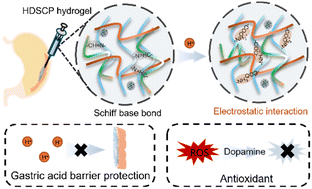
Gastric mucosal injury is aggravated by sustained acid secretion, while conventional oral therapeutics suffer from limited bioavailability and lack intrinsic barrier properties. To overcome these challenges, we synthesized an injectable, acid-stable and antioxidant hydrogel (HDSCP) for ulcer repair. The system integrated a dynamic Schiff base network formed by dopamine-modified oxidized hyaluronic acid (HD) and carboxymethyl chitosan (CMCS) with polydopamine nanoparticles encapsulating ranitidine hydrochloride (PDR). Sodium alginate (SA) was incorporated to enhance acid resistance via electrostatic force. The dopamine group endowed the hydrogel with superior adhesion and antioxidant activity. Our HDSCP hydrogel promotes mucosal regeneration through two synergistic mechanisms: scavenging reactive oxygen species (ROS) to alleviate inflammation and establishing a protective barrier against gastric acid. The Transwell gastric acid barrier experiment demonstrated that the HDSCP hydrogel could mitigate the impact of gastric acid on cell viability and proliferation, thereby enhancing the cell survival rate. In vivo evaluation in an ethanol-induced rat gastric injury model confirmed that HDSCP significantly accelerated mucosal repair and regeneration. Overall, the HDSCP hydrogel offers a strategy for improving gastric mucosal integrity through its physical barrier function and ROS scavenging ability.
 Please wait while we load your content...


