


 PLATFORM UPDATE:


The probe–act paradigm in plasmonic cancer nanomedicine: advances in cancer diagnostics, therapy, and theranostics

Abstract
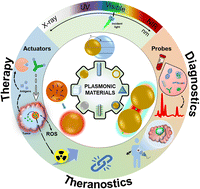
Plasmonic nanostructures have evolved into multifunctional tools for cancer management, uniting ultrasensitive detection with controlled therapeutic intervention within a probe–act paradigm. Their optical behavior is governed by localized surface plasmon resonance (LSPR), which concentrates electromagnetic fields and converts optical excitation into hot carriers and nanoscale heating. As probes, these effects enable surface-enhanced Raman scattering (SERS), surface-enhanced infrared absorption (SEIRA), and label-free plasmonic sensing for molecular readouts and imaging. As actuators, the same platforms drive photothermal therapy (PTT) and enhance photodynamic therapy (PDT), especially under near-infrared (NIR) excitation that improves tissue penetration. Bridging both roles, theranostic designs integrate sensing and treatment to support real-time “see-and-treat” workflows. This review summarizes mechanistic principles, biomedical applications, and translational challenges of plasmonic nanostructures, emphasizing their role as biophysical tools bridging molecular diagnostics and targeted therapy. Framed as biophysical tools, plasmonic nanostructures provide a coherent route from precise molecular surveillance to targeted therapeutic intervention, advancing the convergence of diagnostics and treatment in modern cancer care.
- This article is part of the themed collection: Journal of Materials Chemistry B Recent Review Articles
 Please wait while we load your content...


