


An AI-assisted hyperbranched RCA-based colorimetric biosensing platform for ultrasensitive detection of BPA
 *a
*a
Abstract
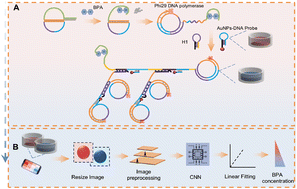
Bisphenol A (BPA), a common industrial chemical and endocrine disruptor, poses serious health risks, highlighting the need for sensitive detection methods. We developed an artificial intelligence–assisted colorimetric biosensor integrating aptamer–target recognition–triggered hyperbranched rolling circle amplification (HRCA) with DNA-functionalized gold nanoparticles (AuNPs-DP) as visual probes. BPA binding induces aptamer conformational switching, initiating HRCA via Phi29 DNA polymerase to produce abundant DNA products that cause AuNPs-DP aggregation and distinct colorimetric changes. This enables direct visual detection with minimal background interference and high specificity, achieving an ultra-low detection limit of 0.575 pg mL−1. Colorimetric images analyzed using a ResNet-18 model allow rapid and accurate BPA quantification both locally and remotely. The proposed biosensor offers low cost, easy operation, and exceptional sensitivity, demonstrating strong potential for on-site water safety monitoring and practical biosensing applications.
 Please wait while we load your content...


