


 PLATFORM UPDATE:


MicroRNA nanocapsules for modulating macrophage polarization to promote bone repair

Abstract
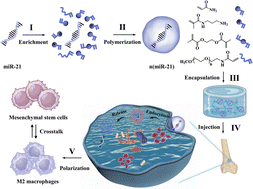
Macrophages, highly versatile immune cells, play essential roles in various pathological conditions. The ability to modulate macrophage phenotypes presents a promising therapeutic strategy. Rapidly transitioning macrophages from the pro-inflammatory M1 phenotype to the anti-inflammatory M2 phenotype is consistent with the natural process of bone tissue repair and is crucial for effective bone healing. In this study, we introduce a strategy utilizing microRNA-based therapy to modulate macrophage polarization, thereby accelerating the early stages of bone tissue healing. Additionally, we have developed a cationic, biodegradable nanocapsule platform delivering microRNAs to macrophages. Our findings demonstrate that the cellular uptake efficiency of these nanocarriers by macrophages is approximately 89.1%. Specifically, microRNA-21 has been shown to regulate the polarization of macrophages towards the M2 phenotype both in vitro and in vivo, while also enhancing the osteoblastic differentiation of mesenchymal stem cells. Collectively, these results significantly promote bone regeneration. The application of microRNA-based therapy to direct macrophage polarization in alignment with the body's intrinsic bone repair mechanisms offers innovative therapeutic approaches to enhance bone healing.
 Please wait while we load your content...


