


 PLATFORM UPDATE:


Hyaluronic acid-based fabric with blood induced network densification and tissue adhesion for bleeding control
 a
Yan
Fang
*a
a
Yan
Fang
*a
Abstract
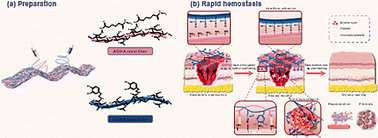
Hemostatic fabric is widely employed as a clinical hemostatic agent, yet its clinical efficacy is significantly limited by blood permeation through the fabric, leading to persistent hemorrhage. To address this critical challenge, an effective hemostatic nanofabric composed of catechol-modified oxidized hyaluronic acid (COHA) and adipic dihydrazide modified hyaluronic acid (ADHA) has been reported. The reported COHA/ADHA nanofabric exhibits exceptional breathability and mechanical flexibility while demonstrating unique hemostatic functionality. Upon blood contact, Schiff base-mediated crosslinking between COHA and ADHA nanofibers induces rapid inter-fiber bonding, creating a dense network that establishes superior blood barrier functionality while simultaneously enhancing erythrocyte and platelet aggregation. Moreover, the COHA/ADHA nanofabric can adhere to the tissue to effectively seal the wound. Through integrated ex vivo and in vivo assessments it was found that the COHA/ADHA nanofabric exhibits enhanced hemostatic efficacy compared to conventional materials including cotton gauze, Combat Gauze™, and Surgicel® Original. Furthermore, the nanofabric demonstrates biodegradability, histocompatibility, and accelerated wound healing rates. This biomimetic design strategy creates a new pathway for developing high-performance hemostatic materials with integrated barrier function and physiological compatibility.
 Please wait while we load your content...


