


 PLATFORM UPDATE:


An ultrathin gas-permeable imperceptible electronic skin enables maxillofacial electrophysiological monitoring
 *bc
and
*bc
and
Abstract
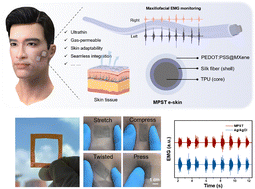
Maxillofacial electromyographic (EMG) signals serve as crucial indirect indicators of occlusal function, playing a significant role in clinical oral diagnosis. However, conventional gel electrodes with occlusive nature induce skin irritation and wearer discomfort, which limits long-term monitoring. Here, we developed an ultrathin, gas-permeable, and flexible electronic skin (e-skin) designed for imperceptible, long-term maxillofacial EMG monitoring. This e-skin comprises a stretchable substrate formed by core–shell elastic fibers fabricated via coaxial electrospinning, coated with PEDOT:PSS@MXene nanocomposite layers. The cross-linking effect between PEDOT:PSS and MXene (specifically, the hydrogen bonding between MXene and PSS chains and the electrostatic interaction between MXene and PEDOT chains) reduces the interlayer spacing, concurrently delaying MXene oxidation by repelling water and air and enhancing electron transfer between MXene layers. In sEMG measurement trials, the e-skin successfully acquired clear, stable myoelectric signals corresponding to various chewing intensities and patterns (e.g., gum chewing and intermittent occlusion). In particular, ultrathin dimensionality substantially diminishes foreign body perceptibility and associated wearer discomfort, thereby elevating sustained comfort thresholds and long-term therapeutic viability. This work presents a novel material-device strategy for next-generation wearable bioelectric sensing platforms, enabling comfortable, precise monitoring with applications in facial muscle assessment, rehabilitation medicine, and neuromuscular diagnostics.
 Please wait while we load your content...


