


 PLATFORM UPDATE:


Keratinocytes biocompatibility, antibacterial and antioxidant properties of porous coacervate phosphate glass fibres and powders loaded with cerium and clove oil: a comparative study
 ab
Irem
Unalan,
c
Oluwadunmininu
Okude,
b
Charlotte A.
Berry,
a
Monica
Felipe-Sotelo,
a
Daniela
Carta
*a
ab
Irem
Unalan,
c
Oluwadunmininu
Okude,
b
Charlotte A.
Berry,
a
Monica
Felipe-Sotelo,
a
Daniela
Carta
*a
Abstract
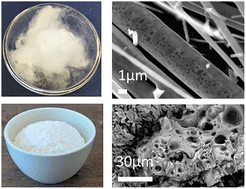
Porous biomaterials offer significant advantages in tissue engineering by promoting cellular attachment and enhancing flow of fluids. Here we present a versatile, sustainable and low-cost manufacturing technology to produce porous phosphate-based glass fibres (PGFs) and powders (PGPs) in the system P2O5–CaO–Na2O unloaded and loaded with cerium ions (Ce = 0, 0.1, 0.2 and 0.4 atomic%). A polyphosphate coacervate gel combined with the porogen Pluronic 123 (P123) was used as precursor material for manufacturing PGFs (via electrospinning) and PGPs (via drying). Porosity was achieved by removing P123 via calcination at 300 °C. Cerium loaded PGPs and PGFs showed good antibacterial activity against the bacterium E. coli. The oxidation state of cerium ions was identified via X-ray Photoelectron Spectroscopy (XPS). Successful direct seeding of keratinocyte cells (HaCaTs) on PGFs was demonstrated for the first time via live cell staining. PGFs’ dissolution products also exhibited excellent cytocompatibility, demonstrating the great potential of PGFs for wound healing applications. To enhance the antibacterial and antioxidant properties, PGFs and PGPs were embedded with the natural antioxidant clove oil (clv). The antioxidant capacity was evaluated using DPPH (2,2-diphenyl-1-picrylhydrazyl) radical scavenging and TPC (Total Phenolic Content) assays. PGFs containing 0.4 atomic% of cerium loaded with clv demonstrated strong antioxidant activity, with DPPH scavenging reaching approximately 87% and phenolic content of around 25 mg gallic acid (GAE) g−1. Finally, the combined effects of cerium ions and clv were further assessed against E. coli and in cell-based assays, including intracellular ROS and scratch wound healing tests. PG-unl-clv and PG-Ce0.2-clv scavenged intracellular ROS and achieved significant wound closure after 48 h.
- This article is part of the themed collection: Wound healing materials
 Please wait while we load your content...


