


 PLATFORM UPDATE:


A novel schisantherin B-loaded Prussian blue nanozyme for treating spinal cord injury

Abstract
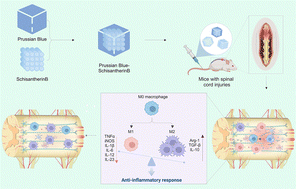
Spinal cord injury (SCI) encompasses a series of pathophysiological processes, including inflammation, apoptosis, autophagy, and pyroptosis, leading to an imbalance in the microenvironment. The microenvironment following injury inhibits axonal regeneration, ultimately resulting in the loss of neurological function. Among these pathological processes, inflammation plays a critical role in the recovery from SCI. The inflammatory cascade triggered by SCI leads to cell apoptosis, cell death, and impaired angiogenesis, which collectively hinder axonal regeneration. In recent years, nano-enzymes exhibiting Prussian blue enzyme-like peroxidase activity have garnered significant attention as alternatives to natural enzymes in therapeutic applications, biosensing, and environmental remediation. Schisandra, a traditional Chinese medicine, contains schisantherin B as its principal component, which has been reported to possess neuroprotective effects in various neurological diseases. In this study, we designed a Prussian blue nanozyme drug delivery system, a schisantherin B-loaded Prussian blue nanozyme (SchB@PBzyme), for the treatment of SCI. Our findings indicate that the SchB@PBzyme significantly suppresses the inflammatory response and promotes neural remodeling, thereby offering a novel treatment strategy for SCI.
 Please wait while we load your content...


