


 PLATFORM UPDATE:


A superoxide anion radical-activatable Golgi-targeting prodrug-based albumin complex for synergistic chemo-immunotherapy of triple-negative breast cancer

Abstract
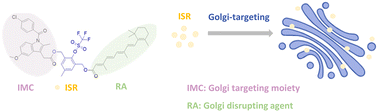
Triple-negative breast cancer (TNBC) poses major treatment difficulties because of its aggressive behavior, the absence of targetable receptors, and resistance to chemotherapy, and an immunosuppressive tumor microenvironment (TME) promotes metastasis. Thus, there is an immediate necessity for creative approaches to conquer the treatment dilemma. The Golgi apparatus, central to processing metastasis- and immune escape-related proteins, emerges as a promising therapeutic target of TNBC. Herein, we report a superoxide anion radical (O2˙−)-activatable, Golgi-targeting prodrug-based albumin complex (DOX-ISR@HSA-DSPE) for synergistic chemo-immunotherapy of TNBC. This complex is formed by loading a rationally designed prodrug (ISR, a conjugate of indomethacin, superoxide anion-responsive linker, and trans-retinoic acid) and the chemotherapeutic drug adriamycin (DOX) with human serum albumin (HSA) and mPEG2000-DSPE as carriers. ISR integrates trans-retinoic acid (RA), indomethacin (IMC), and an O2˙−-responsive linker. IMC enables precise Golgi targeting via COX-2 recognition while suppressing prostaglandin E2 (PGE2) biosynthesis to reverse TME immunosuppression and inhibit metastasis. HSA and mPEG2000-DSPE carriers synergistically enhance tumor enrichment of both payloads, minimizing off-target exposure to normal tissues. Upon intratumoral O2˙− activation, ISR releases RA to disrupt Golgi function and IMC to inhibit immunosuppressive pathways. This multifaceted approach concurrently implements chemotherapy and reprograms the TME, demonstrating potent anti-tumor and anti-metastatic efficacy against TNBC, providing high translational potential for the comprehensive treatment of immunologically cold tumors.
 Please wait while we load your content...


