


 PLATFORM UPDATE:


A cystine-containing cationic lipopeptide-based injectable hydrogel with antimicrobial activities against multi-drug resistant strains and anti-biofilm efficacy against methicillin-resistant Staphylococcus aureus
 a
Neha
Poddar,
†b
Swrajit Nath
Sharma,
†c
Swapnendu
Deb,
a
Tanushree
Mondal
a
and
Arindam
Banerjee
*a
a
Neha
Poddar,
†b
Swrajit Nath
Sharma,
†c
Swapnendu
Deb,
a
Tanushree
Mondal
a
and
Arindam
Banerjee
*a
Abstract
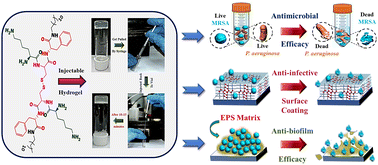
A ubiquitous global threat of emerging multi-drug resistant (MDR) strains causing outbreaks of biofilm-mediated hospital-acquired infections (HAIs) has resulted in severe nosocomial contagious diseases, chronic wound inflammation, and lethal sepsis. Surface contamination of medical devices, implants and community transmission have further worsened the persistently high rate of morbidity and mortality spawned by epidemic resistant strains of opportunistic pathogens such as methicillin-resistant Staphylococcus aureus (MRSA). Herein, a disulphide bridge containing an amphiphilic cationic peptide (AP1) has been designed, synthesised, characterised and studied for antibacterial activity against several multi-drug resistant strains. Notably, the lipopeptide AP1 spontaneously self-assembled to form an injectable hydrogel in Tris–HCl buffer (within a pH range of 7.2–8.0). Field emission gun transmission electron microscopic data showed an intertwined nanofibrillar morphology. Several spectroscopic techniques, including Fourier-transform infrared spectroscopy, X-ray diffraction, UV-visible spectroscopy, and circular dichroism, have been utilised to characterize the self-assembly of the synthesized AP1. Interestingly, this self-assembled peptide is found to exhibit potent antimicrobial activities against Gram-positive (MRSA and Bacillus subtilis) as well as Gram-negative (Klebsiella pneumoniae, Acinetobacter baumannii, Pseudomonas aeruginosa, and Escherichia coli) bacterial strains. Detailed mechanistic studies have illustrated the antibacterial efficacy against MRSA and MDR Pseudomonas aeruginosa via membrane disruption along with reactive oxygen species (ROS) generation. The biofilm inhibition and mature biofilm destruction capabilities of self-assembled AP1 were observed against MRSA due to the combined effect of the reduction competency of extracellular polymeric substances (EPS) and planktonic cytolysis. This subsequently corroborated the hydrogel's application as an anti-infective surface-coating biomaterial. The MTT assay with eukaryotic mammalian cells (HEK-293, NKE, HaCaT) and haemolytic assay convincingly substantiated the biocompatibility of the self-assembled amphiphilic peptide, emphasizing its therapeutic potential as an antibacterial agent in biomedicine.
 Please wait while we load your content...


