


 PLATFORM UPDATE:


Multifunctional soft anti-swelling hydrogel-based sensor reinforced with carboxylated-MWCNTs and CMC for human motion detection and air–underwater communication

Abstract
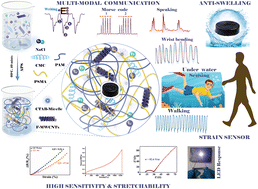
Wearable hydrogel-based strain sensors that can operate reliably in both air and water are difficult to develop because conventional hydrogels tend to swell, weaken, and lose signal stability in aqueous environments. In this work, a structurally stable, anti-swelling, conductive hydrogel was designed by combining a hydrophobically associated polymer network with nanoscale conductive reinforcement. The material was synthesized from acrylamide (AAm) and stearyl methacrylate (SMA) in the presence of cetyltrimethylammonium bromide to generate reversible hydrophobic junctions. At the same time, carboxymethyl cellulose (CMC) and carboxylated multiwalled carbon nanotubes (COO-MWCNTs) were incorporated to strengthen the network and establish efficient electrical pathways. The hydrogel is soft due to its wide linear viscoelastic region (0.01–68% strain). This cooperative structural design produced a flexible and mechanically resilient hydrogel (0.57 MPa stress, 1254% strain, and toughness of 271.9 kJ m−3) with a conductivity of 82.6 S m−1, and a rapid response/recovery time (110/100 ms in air and 210/250 ms in water). The sensor displayed stable strain sensitivity, with gauge factors of about 17.52 in air and 9.54 in water, with a swelling ratio of only 20%, indicating good anti-swelling behavior and stable sensing performance under both dry and aqueous conditions. It successfully tracked a wide range of large and small human motions in both environments, demonstrating reliable performance under dynamic mechanical conditions. In addition, the device translated mechanical stimuli generated during writing, speech-related vibrations, and Morse-code tapping into distinct electrical signals, indicating its capability for multimodal communication sensing. These results demonstrate an effective materials design approach for producing environmentally stable hydrogel sensors suitable for wearable electronics, underwater monitoring, and interactive human–machine systems.
 Please wait while we load your content...


