


 PLATFORM UPDATE:

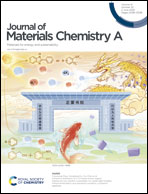
Synergistic defect engineering and interfacial regulation in amphiphilic cerium-based metal–organic frameworks for efficient heavy oil upgrading
 *ab
*ab
Abstract
Heavy oil constitutes a significant portion of global hydrocarbon resources, yet its efficient utilization is hindered by high viscosity, complex composition, and energy-intensive upgrading processes. Conventional thermal and catalytic methods often require harsh conditions and suffer from limited efficiency under reservoir-relevant environments. Here, an amphiphilic cerium-based metal–organic framework nano-catalyst (Ce/MOF-SDG) is developed through oxygen-vacancy defect engineering and sulfonated polymer grafting to address the coupled challenges of sluggish bond activation and inefficient oil–water interfacial mass transfer. The catalyst integrates defect-rich mixed-valence Ce3+/Ce4+ active sites with tailored interfacial functionality, enabling effective catalytic performance under mild conditions. As a result, a viscosity reduction of up to 91.4% is achieved at 50 °C, accompanied by enhanced conversion of heavy fractions and removal of sulfur-, nitrogen-, and oxygen-containing species. Ultralow oil–water interfacial tension and high colloidal stability promote improved dispersion and transport in multiphase systems. Density functional theory calculations reveal that oxygen-vacancy-induced Lewis acidic sites facilitate C–X bond cleavage, underpinning the upgrading process. This work establishes a defect and interface co-engineering strategy for designing advanced catalytic materials toward energy-efficient and sustainable heavy oil upgrading.

- This article is part of the themed collection: Journal of Materials Chemistry A HOT Papers
 Please wait while we load your content...


