


Artificial interphase layers on sodium metal anodes: preparation strategies, design principles, and future outlook

Abstract
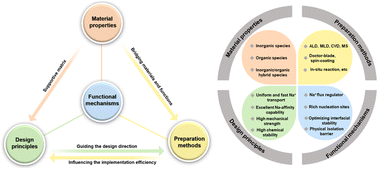
The commercial feasibility of sodium metal batteries (SMBs) is hampered by unfavorable factors within sodium metal anodes, such as interfacial instability, undesirable side reactions, and uncontrollable dendrite growth. To tackle these issues, various artificial interphase layers (AILs) have been designed to enhance the electrochemical performance of SMBs. However, it is noteworthy that recent reviews on sodium metal anodes are based mainly on the material properties of AILs, rather than summarizing the latest advances from the perspective of preparation strategies. In this review, the current progress in AILs is systematically summarized, primarily covering preparation strategies, functional mechanisms, design principles, and the corresponding electrochemical behaviors. Notably, this review emphasizes a comparative analysis of the advantages and disadvantages of different fabrication methods. Meanwhile, sophisticated characterization techniques and theoretical calculations are proposed to uncover Na deposition/stripping processes and clarify the functional origins of AILs. Finally, future research priorities for AILs in SMBs are provided.
- This article is part of the themed collection: Journal of Materials Chemistry A Recent Review Articles
 Please wait while we load your content...


