


ICP-assisted pre-lithiation of silicon thin-film electrodes for achieving high initial coulombic efficiency for lithium-ion batteries using inductively coupled plasma for lithium impregnation
 *a
*a
Abstract
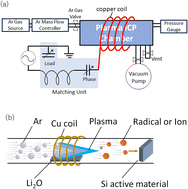
Silicon-based anodes offer the promise of significantly enhanced energy density for next-generation lithium-ion batteries but are challenged by complex volume expansion and rapid capacity decay during charge–discharge cycling. To overcome these limitations, mechanochemical methods have been used to synthesize nanoscale silicon–lithium–metal composite powders showing improved cycling stability. In this study, we developed an alternative approach utilizing inductively coupled plasma (ICP) technology for the impregnation of lithium ions into silicon substrates to reproduce complex composite nanostructures. An ICP system operating at 13.56 MHz with argon plasma was constructed and optimized for stable plasma generation. Silicon-sputtered thin films on copper foil were subjected to lithium-ion impregnation using ICP at various voltage biases. Comprehensive characterization including scanning electron microscopy, X-ray diffraction, and X-ray photoelectron spectroscopy confirmed the successful formation of lithium-containing silicon alloy and amorphous phases. Initial coin cell tests using ICP-treated silicon thin films demonstrated lithium insertion, and the results achieved a high coulombic efficiency of 98.3%. The high initial coulombic efficiency (∼98%) is mainly attributed to the ICP-induced pre-lithiation of the 500 nm Si thin films, as confirmed by the formation of lithium–silicon alloy phases and lithium depth profiles, while a possible contribution from a modified and potentially more stable solid electrolyte interphase is also discussed. This work provides foundational data for the ICP-based scalable synthesis of advanced Si-based anode materials, with implications for the next generation of lithium-ion battery technologies. In this proof-of-concept study, the term “initially high coulombic efficiency” refers specifically to the first cycle. In this cycle, ICP-induced pre-lithiation mitigates irreversible lithium (Li) loss during SEI formation. Systematic long-term cycling will be addressed in future work.
 Please wait while we load your content...


