


 PLATFORM UPDATE:


Designing recyclable inorganic–organic hybrid polymer coatings through integrating silicone-based molecular scission points

Abstract
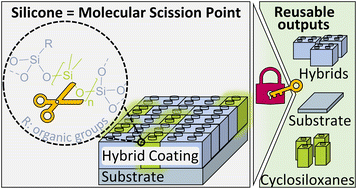
Inorganic–organic hybrid polymer coatings (IOHPCs) enhance the sustainability and the quality of life during their use e.g., as PFAS-free hydrophobic coatings on glass surfaces. Although their modular structure is key to highly adaptable performance, it poses an environmental challenge because it hinders efficient recycling. This study fundamentally shifts the molecular design paradigm of IOHPCs to achieve harmony between performance and recyclability (Design for Recycling). Therefore, silicone chains are introduced as molecular scission points within IOHPCs to enable fluoride-triggered depolymerization. The resulting coatings exhibited hydrophobic surfaces and tunable mechanical properties (full range of pencil hardness from very soft to very hard) that depended on silicone chain length and concentration. Contact with the tetrabutylammonium fluoride (TBAF) catalyst induced the collapse of the hybrid network and total delamination in a single step. This process yields reusable outputs, such as cyclic siloxanes (mainly D4), suitable for silicone synthesis, and also preserves the substrate for direct reuse. These results demonstrate that recyclability can be successfully incorporated into the molecular design of IOHPCs, thereby making them compatible with existing silicone recycling techniques while preserving their coating performance.
- This article is part of the themed collection: Celebrating the 80th birthday of Professor Dr Ulrich Schubert
 Please wait while we load your content...


