


 PLATFORM UPDATE:

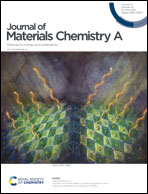
Extensive catalyst: Atomic-level Ni-doping enhanced the built-in electric field to promote water oxidation
Abstract
Developing efficient oxygen evolution reaction (OER) electrocatalysts for clean hydrogen production is an important part of transitioning away from conventional energy resources. Herein, this work presents a metal-organic framework-derived Nidoped Co9S8 catalyst confined in nitrogen-doped carbon (Ni-Co9S8@NC), featuring an enhanced charge transfer kinetics due to the large electrochemically active surface area and high conductivity of the conductive carbon. In situ characterizations and density functional theory calculations reveal that the Ni-Co9S8 component was reconstructed into the built-in electric field structure (i.e., the extensive catalyst structure: Ni doped Co(OH)2/CoOOH shell coated on Ni-Co9S8 core) during OER. This Ni-doped built-in electric field regulated d-band centers of interface Co sites and optimized the adsorption/desorption energies of OER intermediates, thus enhancing the adsorbate evolution mechanism pathway and obtaining excellent OER performance. The anion exchange membrane electrolyzer of above as-prepared catalysts achieved a cell voltage of 1.85 V at a high current density of 1 A cm -2 , outperforming noble-metal catalysts-based RuO2||Pt/C electrolyzer (2.11 V @ 1 A cm - 2 ). This work provides an atomic-level Ni-doping strategy to tailor the built-in electric field for obtaining high-performance, noble metal-free catalysts in scalable green hydrogen production.
 Please wait while we load your content...


