


 PLATFORM UPDATE:

From direct regeneration to upcycling: recycling of spent LiFePO4 cathodes
 *b
and
Lei
Zhang
*a
*b
and
Lei
Zhang
*a
Abstract
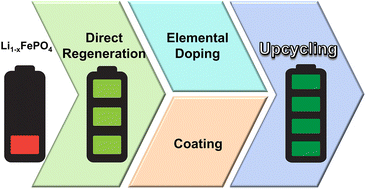
The massive use of lithium iron phosphate (LFP) batteries in energy storage systems and electric vehicles has led to a growing volume of retired batteries, posing serious environmental and resource challenges if improperly handled. Traditional recycling methods, including pyrometallurgy and hydrometallurgy, suffer from high energy consumption and substantial costs and pose the risks of secondary pollution. In contrast, direct regeneration presents an eco-friendly alternative that enables effective capacity recovery while preserving the crystal structure of the cathode materials. However, the key limitations of regenerated LFP, particularly in terms of energy density, conductivity, and economic viability, have been revealed by the increasingly stringent performance demands. These hindrances to broader applications drive the need for upcycling approaches to enhance its performance. This review presents recent advances in the direct regeneration strategies of LFP cathodes, with an in-depth discussion of failure mechanisms, regeneration principles, and existing limitations. Subsequently, the research progress in LFP upcycling techniques, including elemental doping and surface coating, is systematically summarized, followed by an analysis on their mechanisms and current developmental constraints. Finally, we summarize the key upcycling mechanisms and propose potential strategies for upcycling. This review highlights the paradigm shift from performance recovery to performance upgradation in LFP regeneration, offering a fresh perspective on the development of regeneration technologies.
- This article is part of the themed collection: Journal of Materials Chemistry A Recent Review Articles
 Please wait while we load your content...


