


 PLATFORM UPDATE:


Built-in electric field driven S-scheme Bi2O2CO3/Bi5O7Br heterojunction for superior photocatalytic mineralization of polystyrene microplastics
 *a
*a
Abstract
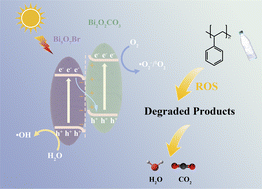
In order to develop an efficient and stable photocatalytic system for removing microplastic pollution in water, we successfully constructed a Bi2O2CO3/Bi5O7Br S-scheme heterojunction composite by a one-step hydrothermal method. The structure, morphology, optical and electrochemical properties of the materials were systematically characterized. Polystyrene (PS) microspheres were used as target pollutants to evaluate their photocatalytic performance. Electron spin resonance (ESR) and liquid chromatography-mass spectrometry (LC-MS) were used to elucidate the role of active species and the degradation pathway. The environmental risk of the degradation process was evaluated by computational toxicology. The BOC/BOB heterojunction exhibits a unique flower-like microstructure and establishes an effective built-in electric field, following the S-scheme charge transfer mechanism. The material exhibits excellent degradation efficiency for PS microplastics. The SEM images clearly reveal the dynamic process of PS from surface erosion and structural fracture to final fragmentation, indicating a mineralization trend. The mechanism study shows that the superoxide radical (˙O2−) is the main active species in the degradation process, and hydroxyl radicals (˙OH) and singlet oxygen (1O2) play a synergistic role. LC-MS analysis deduced the possible degradation pathway of PS microplastics. Toxicity assessment showed that the acute toxicity of the degradation intermediates was generally reduced and demonstrated reduced environmental risks. This study shows great application potential in the synergistic degradation of microplastics and provides new insights and an experimental basis for the design of photocatalytic systems for complex water environment remediation.
- This article is part of the themed collection: Journal of Materials Chemistry A HOT Papers
 Please wait while we load your content...


