


 PLATFORM UPDATE:


Micronuclear batteries for nuclear waste transmutation and sustainable energy: a comprehensive review and future perspectives
Abstract
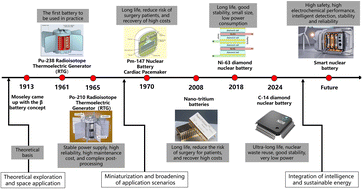
Nuclear energy is a clean alternative to fossil fuels, yet radioactive waste, with long-term hazards, remains a key bottleneck for its sustainability. This review explores a transformative solution: using nanotechnology to convert nuclear waste into sustainable micronuclear batteries, summarizing recent advancements in this emerging field and emphasizing the critical role of nanomaterial design and nanoengineering. It discusses nuclear battery classification, highlighting how nanostructures enhance energy conversion efficiency, with betavoltaic batteries being the most promising, as they use 14C from spent nuclear graphite and 63Ni from reactor alloys. Subsequently, it examines their applications in aerospace, deep-sea exploration, artificial intelligence, and biomedicine. Finally, it addresses prevailing challenges and future directions, underscoring nanotechnology's potential to tackle both nuclear waste management and sustainable energy generation.
- This article is part of the themed collection: Journal of Materials Chemistry A Recent Review Articles
 Please wait while we load your content...


