


 PLATFORM UPDATE:


Can recycled e-waste polymers power the future of sensors?

Abstract
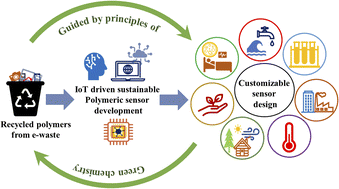
Industries in both developed and developing countries are under growing pressure to align with sustainable development goals (SDGs) while simultaneously contributing to economic development. Several SDGs inevitably require maintenance of air, water, and soil quality. Industrial effluents typically pollute these natural resources, which in turn need effective monitoring through sensors. Conventionally, sensors have relied largely on semiconductor materials; however, their high cost, manufacturing bottlenecks, availability, and environmental footprint limit their suitability in many low- and middle-income countries. In contrast, polymeric sensors, particularly if derived from recycled plastics, could offer a scalable, customizable, and cost-effective platform. Their inherent flexibility, light weight, and easy fabrication enable seamless integration into Internet of Things (IoT) devices, which would help industries move closer toward decentralized monitoring. Electronic waste (e-waste) could serve as a suitable and valuable source of polymers for sensor materials, given their high diversity and that much of recycled e-waste polymers are incinerated or landfilled. This article unearths new opportunities in the field of urban mining in the form of combining recycled e-waste plastics and IoT-integrated polymer science to advance sustainable and customizable sensor development. It is hoped that these ideas would tremendously strengthen circular economy initiatives, particularly in resource-constrained economies.
- This article is part of the themed collection: Journal of Materials Chemistry A Recent Review Articles
 Please wait while we load your content...


