


 PLATFORM UPDATE:


Harnessing an mpg-C3N4 photocatalyst for the selective oxidative coupling of amines to yield azoaromatic compounds

Abstract
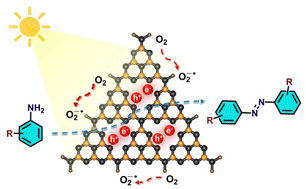
Developing sustainable and efficient methods for the oxidative coupling of arylamines to generate aromatic azo compounds under mild conditions remains a significant challenge in the realm of sustainable chemistry. In this study, a metal-free mesoporous graphitic carbon nitride (mpg-C3N4) photocatalyst was synthesized via a straightforward one-step thermal polymerization reaction of urea, resulting in a high surface area of 109.40 m2 g−1 and enhanced charge separation. The mpg-C3N4 photocatalyst was thoroughly characterized through XRD, XPS, HR-TEM, and BET analyses, confirming its mesoporous structure, crystallinity, and thermal stability. Under light irradiation in ambient air, mpg-C3N4 efficiently activated atmospheric O2 to generate reactive superoxide radicals, enabling selective azo formation with up to 99% conversion and selectivity across a range of aromatic amines. DFT calculations and adsorption studies revealed the role of π–π stacking and favorable adsorption Gibbs energies, underpinning effective substrate activation and surface interaction. Mechanistic investigations, aided by EPR and DFT studies, elucidated that photoexcited electrons reduced O2 to superoxide radicals, which mediated the oxidative coupling process. Reusability tests confirmed the catalyst's stability across five cycles, exhibiting no significant loss of activity or structural integrity. This sustainable, metal-free photocatalytic strategy, harnessing renewable light energy, not only demonstrates the scalable synthesis of azo compounds but also paves the way for new approaches to the green synthesis of functional azoaromatics.
- This article is part of the themed collection: Advances in Sustainable Catalysis: from Materials to Energy and Environmental Applications
 Please wait while we load your content...


