


 PLATFORM UPDATE:


Surface engineering strategies to mitigate phosphoric acid poisoning in oxygen reduction catalysts for HT-PEMFCs
 a
a
Abstract
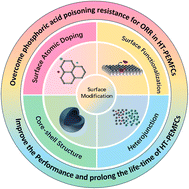
The sustainable production and efficient utilization of hydrogen are central to achieving global carbon neutrality. Among hydrogen technologies, high-temperature proton exchange membrane fuel cells (HT-PEMFCs) stand out due to their high efficiency, superior CO tolerance, and simplified water and thermal management. However, the harsh operating environment, particularly the strong adsorption of phosphate species derived from phosphoric acid (PA), severely degrades the kinetics and long-term stability of the oxygen reduction reaction (ORR) in cathode catalysts. This review provides a systematic summary of the most significant developments reported over the past five years, focusing on surface engineering strategies for designing PA-tolerant ORR electrocatalysts in HT-PEMFCs. The discussion begins with mechanistic insights into PA poisoning of Pt-based catalysts and progress in various representative surface modification strategies. The underlying mechanisms by which these strategies modulate electronic structures, optimize adsorption–desorption behavior, and enhance catalytic durability are elucidated through typical case studies. Finally, the challenges and future opportunities for achieving mechanistically guided design, synergistic multi-strategy modification, and scalable synthesis are highlighted.
- This article is part of the themed collections: Journal of Materials Chemistry A Recent Review Articles and Journal of Materials Chemistry A HOT Papers
 Please wait while we load your content...


