


 PLATFORM UPDATE:


Mobility of interfaces in silicon-based anodes
 *a
and
Alexey Y.
Koposov
*a
*a
and
Alexey Y.
Koposov
*a
Abstract
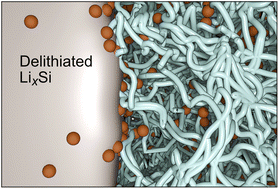
Silicon (Si) is a promising anode material for next-generation lithium-ion batteries (LIBs), but its practical use is limited due to severe degradation during electrochemical cycling. The morphological changes of Si are affected by the selection of an electrolyte, and its role in such transformations remains a subject of debate. The lack of experimental and computational methods to examine these interactions at the molecular level also impedes the accurate chemical characterization of this complex system. This study evaluates the interaction of Si nanoparticle(s) with ether-based electrolytes using a reactive force field approach. The interplay between the Si nanoparticles and the electrolyte during (de)lithiation leads to a significant structural deformation of the Si particles and the formation of a thick interdiffusion layer where Si atoms are mixed with the electrolyte moieties. This layer is mainly formed during delithiation, whereas lithiation leads to constrained interdiffusion. The intermixing and mobility at the Si/electrolyte interface highlight the electrolyte's critical role in mitigating the degradation of Si-based anodes during delithiation.
 Please wait while we load your content...


