


 PLATFORM UPDATE:

Bimetal co-doped nickel sulphides for enhanced seawater-mediated chlorine evolution reaction: an avenue for in situ pollutant mitigation

Abstract
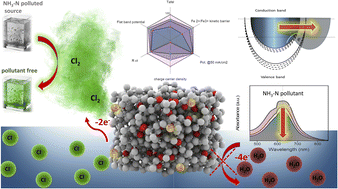
Chlorine evolution reaction (CER) is a critical reaction in the chlor-alkali process and seawater electrolysers, which are two sustainable paths for value-added product generation. However, the CER is extensively limited by its poor selectivity over the oxygen evolution reaction (OER) due to their common active sites and closely lying equilibrium potentials. Herein, we report a single-step-derived bimetallic Au-Ag co-doped NiS2 (NSMAuAg) catalyst with superior CER activity in a simulated seawater chloride electrolyte under acidic conditions, exhibiting a Tafel slope of approximately 41 mV per dec. The faster charge transfer kinetics of NSMAuAg are manifested by a narrow redox potential gap of 167 mV over the ferro-ferri system. The optimised NSMAuAg exhibits 65% more charge carrier density and the least charge transfer resistance at the electrode-electolyte interface, which was able to increase currents to the rate of 110 mA cm−2 at a relatively low overpotential of 70 mV without considerable diffusion limitation effects. The poisoning studies prove the direct involvement of metal active centers in CER catalysis. Rotating ring disc measurements confirm the production of chlorine, which is estimated quantitatively using iodometric titration. DFT analysis shows that the dual doping strategy enhances the catalytic activity of the NiS2 host, where the non-adjacent Au sites are found to be the most active sites for the CER. We have also practically demonstrated an in situ degradation approach of NH4+-N pollutants that are usually present in industrial sewage resources by utilizing the active chlorine agents produced during the CER, which paves promising avenues towards a green and sustainable pollutant remediation system.
 Please wait while we load your content...


