


 PLATFORM UPDATE:


In situ photo-Fenton-like reaction and oxygen evolution through polaron-mediated WO3

Abstract
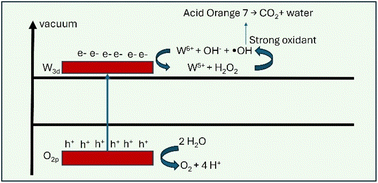
The effective utilization of both electrons and holes in semiconductor-based photocatalysis is crucial for enhancing light-driven chemical reactions. However, the photocatalytic performance of WO3 is limited by its low conduction band potential, which restricts its ability to generate reactive species such as superoxide radicals and to facilitate hydrogen production. Consequently, WO3 primarily relies on holes for redox processes, reducing its overall photocatalytic efficiency. This paper proposes a novel strategy to simultaneously exploit both charge carriers by activating a photo-Fenton-like reaction driven by the polaronic phenomena of electrons (W5+ formation). Electrons are responsible for generating hydroxyl radicals (˙OH), enabling the degradation of acid orange 7 dye with an activity ten times higher than that of the conventional Fenton reaction. Meanwhile, holes effectively drive the oxygen evolution reaction (OER), achieving an oxygen yield of 1.62 mmol g−1 h−1. The polaronic behaviour of WO3 was further optimized by accelerated supersaturation degree through protonation which enhances the surface properties and increases W5+ formation during light irradiation. This strategy led to approximately threefold enhancement in acid orange 7 degradation and a 2.3-fold increase in OER performance (3.66 mmol g−1 h−1, one of the highest reported values). Overall, this study presents a new approach to optimizing charge carrier utilization in photocatalysis, offering a promising pathway toward more efficient and versatile semiconductor-based systems.
 Please wait while we load your content...


