


 PLATFORM UPDATE:

Role mechanisms, design principles and engineering strategies of bimetallic and multi-metallic catalysts for the eCO2RR
 *ab
Weimin
Kang
*ab
*ab
Weimin
Kang
*ab
Abstract
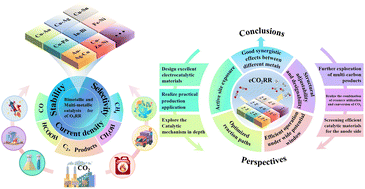
With the escalating severity of fossil fuel consumption and environmental pollution, there is an urgent need to develop effective strategies for reducing CO2 emissions. The electrocatalytic carbon dioxide reduction reaction (eCO2RR) has emerged as a promising approach to effectively convert CO2 into valuable chemicals or carbon-based fuels, thus contributing to the rebalancing of the carbon cycle. Among various catalytic materials, bimetallic and multi-metallic catalysts can effectively exert synergistic effects between or among metals, thereby endowing the reaction with novel merits. These catalysts not only can modify the electronic structure of the base metal, but also provide new active sites, thus effectively enhancing the adsorption of reaction intermediates and subsequently improving reaction activity and selectivity. The review systematically summarizes recent advances in bimetallic and multi-metallic catalytic materials for the eCO2RR. It first explores the synthetic strategies and mechanistic roles of bimetallic and multi-metallic catalysts in regulating the activity, selectivity and stability of eCO2RR, followed by a novel classification based on various catalytic products, detailing several significant breakthroughs achieved based on various bimetallic and multi-metallic combinations in eCO2RR performance. Additionally, the review also consolidates some insights into the design principles, structural characteristics and performance advantages of different metal combinations. Finally, this review also provides an overview of the current state of bimetallic and multi-metallic catalysts in the eCO2RR, emphasizing the challenges they face in practical applications and outlining future research prospects.
- This article is part of the themed collection: Journal of Materials Chemistry A Recent Review Articles
 Please wait while we load your content...


