


 PLATFORM UPDATE:


Insights into the mechanism of enhanced methane low-temperature coupling conversion over zeolite-encaged Ni–Pt catalysts

Abstract
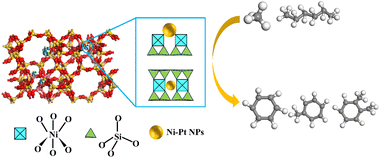
As a substitute for petroleum resources, the direct and efficient conversion of methane to aromatics in the absence of oxygen at low temperatures holds significant strategic importance for industrial development. In this study, we developed a novel bifunctional Ni-Pt@MFI zeolite catalyst which embedded nanometric Ni–Pt alloys within MFI zeolites. Density functional theory (DFT) calculations and experimental characterization conclusively demonstrate that although the introduction of Pt reduces the adsorption strength of methane on the cluster, it alters the electronic structure of Ni, bringing its d-band center closer to the Fermi level, thereby resulting in higher catalytic activity. The Ni–Pt alloys enable the activation of C–H bonds at 250 °C and the highest methane conversion rate reached 10.89% at 450 °C. Additionally, the hydroxylated Ni phyllosilicate optimized the acidity of the catalysts, achieving a high aromatics selectivity of up to 81.29% at 400 °C. Importantly, a mechanistic study including an isotope labeling experiment revealed that methane successfully participated in the formation of alkanes and aromatics and the presence of olefin intermediates played a critical role in methane conversion, with carbocations generated from methane activation reacting with these intermediates to produce high-carbon alkanes and alkenes. This interaction significantly influenced product distribution across various temperatures. This work is anticipated to provide valuable insights into the development of low-temperature catalysts for methane activation and elucidate the innovative conversion pathways involved.
 Please wait while we load your content...


