


 PLATFORM UPDATE:


Deciphering the role of LiBr as a redox mediator in Li–O2 aprotic batteries

Abstract
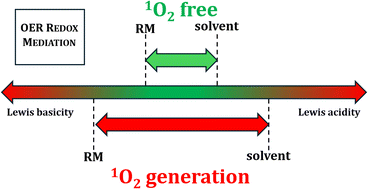
Lithium–oxygen batteries (Li–O2) represent a highly promising category of energy storage systems, primarily owing to their elevated theoretical energy density. Nevertheless, their effective deployment is significantly impeded by challenges such as inadequate reversibility and the presence of undesirable parasitic reactions. Recent investigations have turned to redox mediators, specifically lithium bromide (LiBr), as a potential solution to improve reaction kinetics and minimize overpotentials in these systems. This research presents a comprehensive analysis of the effects of three distinct solvents – dimethoxyethane (DME), tetraethylene glycol dimethyl ether (TEGDME), and dimethyl sulfoxide (DMSO) – on both the electrochemical performance and reaction mechanisms of LiBr-mediated lithium–oxygen cells. The findings indicate that singlet oxygen (1O2), which contributes to cell degradation through secondary reactions, is generated only in the presence of TEGDME as the electrolyte solvent. In contrast, while both DME and DMSO enable oxygen evolution without forming singlet oxygen, only DME exhibits chemical stability under the operating conditions of LiBr-mediated Li–O2 cells. Furthermore, a comparative analysis of the redox mediation effects arising from lithium iodide (LiI) and LiBr across various solvent environments reveals that the activation of the singlet oxygen release pathway occurs when the Lewis acidity and basicity of the oxidized redox mediator and the solvent are aligned—for example, when both behave as weak acids/bases or as strong acids/bases. This study elucidates the nuanced interactions between solvents and redox mediators, thereby contributing to the advancement of more efficient lithium–oxygen battery systems.
 Please wait while we load your content...


