


 PLATFORM UPDATE:


Mechanochemically engineered ammonium magnesium-sulfate double salts synthesized from ammonium carbonate for improved nitrogen-use efficiency

Abstract
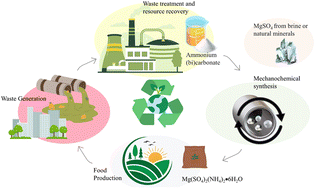
Ammonium carbonate (AC) represents a concentrated ammonium precursor with potential relevance for nitrogen (N) recovery from anaerobic digestate, but its direct use in soils is limited by chemical instability and rapid N loss. In this study, ammonium carbonate was used as a model ammonium source to synthesize a magnesium ammonium sulfate double salt, Mg(NH4)2(SO4)2·6H2O (MgSA), and its performance in soil was evaluated relative to ammonium carbonate and urea. In particular, MgSA was prepared via a solid-state green solvent-free mechanochemical method and structurally characterized by X-ray diffraction and thermal analysis. MgSA was synthesized at high conversion for the molar MgSO4·7H2O : AC of 0.8 : 1.2 to 1.2 : 0.8 using epsomite salt as a precursor on a mg scale, while 20 gram batches were synthesized using anhydrous MgSO4·7H2O and AC mixtures. Ammonia volatilization of MgSA was assessed under controlled laboratory conditions, while agronomic performance was evaluated in growth-chamber experiments using romaine lettuce grown in three sandy loam soils with contrasting physicochemical properties. Under high relative humidity, MgSA granules exhibited a significant decrease in NH3 emission as obtained using the Richards kinetic model, as compared to the AC. In growth chamber experiments, MgSA sustained strong lettuce growth, often matching or exceeding the performance of urea and ammonium carbonate while avoiding excessive soil nitrate accumulation via sustained nitrogen delivery, allowing plant uptake to remain stable. The simultaneous supply of magnesium and sulfur enabled chlorophyll synthesis and nitrogen assimilation, demonstrating the value of integrating multiple essential nutrients into a single crystalline phase. We conclude that this work charts pathways for using waste-derived AC as a promising green chemistry agent that can be mechanochemically combined with mineral salts and contribute to global nitrogen cycling.
 Please wait while we load your content...


