


 PLATFORM UPDATE:


Green synthesis of EuCN S-scheme photocatalysts via Centella asiatica extract for enhanced MB photodegradation and H2O2 photoproduction: DFT investigation and mechanistic insights
 *abd
*abd
Abstract
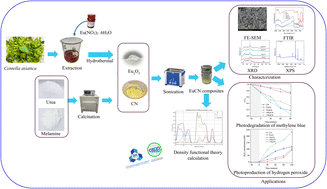
Driven by the growing demand for sustainable solutions in environmental remediation and solar energy conversion, a green synthetic strategy was employed to prepare europium oxide (Eu2O3) using Centella asiatica extract, followed by integration with graphitic carbon nitride (CN) to fabricate EuCN composite photocatalysts. Characterization techniques including FTIR, XRD, FE-SEM, EDX, UV-DRS, BET, TEM, SAED, and XPS confirmed the structure and properties. Optical and electrochemical features were further evaluated using PL, Mott–Schottky, I–t, and EIS analyses. The composition of the extract was confirmed by HPLC. The as-prepared EuCN composites demonstrated remarkable photocatalytic performance, achieving 93.82% degradation of methylene blue and 233.73 µM hydrogen peroxide generation under visible light irradiation. The effects of key operational parameters, including catalyst dosage, pH, and pollutant concentration, were examined to optimize the photocatalytic response. Mechanistic analysis combined with density functional theory (DFT) calculations indicated that the enhanced photocatalytic activity is governed by an S-scheme charge-transfer pathway, supported by work function alignment and interfacial electronic structure regulation. The redox cycling between Eu3+ and Eu2+ associated with 4f orbital characteristics further contributes to charge separation and preservation of strong redox potentials. These results demonstrate the potential of EuCN composites for multifunctional applications in environmental purification and solar-to-chemical energy conversion.
 Please wait while we load your content...


