


 PLATFORM UPDATE:


The plastics problem: a qualitative life cycle analysis case study for green and sustainable chemistry education

Abstract
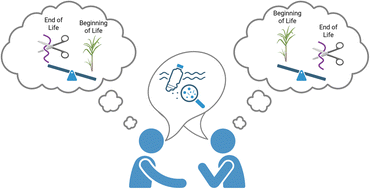
In academic and industrial chemistry societies, long-standing professional interests in sustainability education are joined by emergent efforts to incorporate green chemistry, such as those outlined by professional societies' guidelines for degree programs. The new benchmarks indicate minimum expectations as a motivator for departments, educators, and curriculum designers to increase students' participation in the skillsets that comprise green and sustainable practices in chemistry. The road to meeting the challenge of education for sustainable development will be eased by examples of how to actively engage post-secondary students at various scales of instruction in the types of performances that underpin green chemistry and sustainability. This article outlines a multi-week case study from a large-enrollment organic chemistry laboratory course at a large midwestern research intensive university in the United States. In small groups, students are expected to engage in various scientific and engineering practices to (1) construct explanations of the chemistry of polymerization, (2) identify problems with respect to different shareholders, and (3) evaluate different solutions at different points in the life cycle as a “qualitative” life cycle analysis. Embedded in this evaluation are several Sustainable Development Goals (SDGs) to guide the analysis. This approach culminates in students using their evidence-based argument to make a decision and propose specific legislation.
- This article is part of the themed collection: Chemical Education for Global Sustainability
 Please wait while we load your content...


