


 PLATFORM UPDATE:


Colourful chemistry of anthocyanins: a tutorial review of applications of anthocyanins in school and university teaching
 *a
*a
Abstract
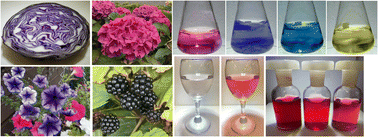
The flowers, fruits and vegetables that we encounter in everyday life provide an opportunity for discussion of key chemistry concepts in school and university level chemistry. The rich variety of colours we see in the natural world are often due to anthocyanins present in flower petals, and the skins of fresh fruit and vegetables. The chemistry of anthocyanins has been studied for over 100 years, and throughout this period, chemistry educators have employed anthocyanin sources in a range of experiments and classroom activities. Anthocyanins are readily available from inexpensive renewable sources, such as flower petals, fruit peelings, foraged fruit and various vegetables. Anthocyanins are often accessible simply by soaking plant tissues in warm water, this allows simple equipment to be used and generation of large quantities of hazardous waste can often be avoided. In this tutorial review, a survey of a wide variety of example uses of anthocyanins in chemistry teaching is presented. Selected exemplar activities, developed by the authors, for use by school and university educators are also described.
- This article is part of the themed collection: Chemical Education for Global Sustainability
 Please wait while we load your content...


