


 PLATFORM UPDATE:


Layered double hydroxides (LDH) materials for effective phosphate adsorption from aqueous solution

Abstract
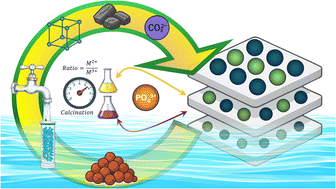
Water eutrophication caused by excess nutrients can be addressed by applying layered double hydroxide (LDH) materials. The LDH structure is based on positively charged layers and negatively charged counterions between the layers, or solvent molecules, which are optimal for phosphate removal. The M2+ : M3+ molar ratio and the synthesis method employed affect LDH properties. LDH materials are synthesized using co-precipitation, urea hydrolysis, hydrothermal treatment, and sol–gel methods. The phosphate adsorption performance of different LDH materials is compared, focusing on Al, Fe, and La, as well as Zn, Mg, and Ca. The role of LDH composites is highlighted. Different optimization parameters, including dosage, contact time, pH, initial concentration, reusability, temperature, and the influence of co-existing ions, are discussed. Interactions such as electrostatic attraction (ES), ion exchange (IX), ligand exchange (LX), ligand complexation (LC), surface complexation (SC), hydrogen bonding (HB), and π–π appear to be the main mechanisms of phosphate adsorption by LDHs. Thus, the need for low-cost and efficient systems for phosphate recycling underscores the promise of tunable LDH composition for selective phosphate adsorption as LDH materials have demonstrated sustained performance, verifiable regeneration, successful real-world piloting, scalable supply, and regulatory standards consistent with the circular economy.
- This article is part of the themed collections: Celebrating International Women’s Day 2026: Women in RSC Sustainability and RSC Sustainability Recent Review Articles
 Please wait while we load your content...


