


 PLATFORM UPDATE:


Synthesis and characterization of thermosetting adhesives from epoxidized Thevetia peruviana oil for sustainable bonding solutions
 *b
and
Kiran Sukumaran
Nair
*ac
*b
and
Kiran Sukumaran
Nair
*ac
Abstract
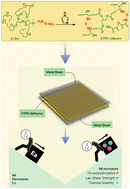
The demand for bio-based epoxy thermoset alternatives within the adhesive industry has seen substantial growth in recent years. This increase is attributed to a heightened exploration of renewable materials, including biopolymers and monomers derived from renewable resources. However, despite these significant advancements, a considerable portion of the research primarily focuses on edible oils, which may inadvertently neglect critical implications for food security. So, this study explores the thermal, mechanical, and adhesive properties of epoxy thermosets derived from biobased epoxidized Thevetia peruviana oil (ETPO) cured with two diamines, 1,10-decane diamine (DDA) and m-xylene diamine (XDA), using imidazole (IM) as a catalytic initiator. The thermosets were evaluated for lap shear strength on stainless steel (SS) and aluminium (Al) substrates at varying imidazole concentrations (0–5%) and curing times (24–96 hours). The results show that DDA-cured thermosets demonstrate superior thermal stability and heat resistance, with T5% increasing from 149 °C to 256 °C and THRI from 139 °C to 162 °C as IM concentration rises. XDA-cured thermosets exhibit higher adhesive strength, peaking at 1.47 MPa on SS at 5% IM and 72 hours, but lower thermal stability, with T5% values decreasing from 157 °C to 68 °C. Imidazole's catalytic efficiency enhanced the crosslinking in both systems, with DDA providing better thermal stability and XDA delivering higher adhesive strength. These findings demonstrate the potential of ETPO-based thermosets as sustainable adhesives, offering excellent performance for industrial applications.
 Please wait while we load your content...


