


 PLATFORM UPDATE:


Mixture design of experiments to improve fungal degradation of cosmetic pigments
 †*ab
Federica
Bianchi
*ab
and
†*ab
Federica
Bianchi
*ab
and
Abstract
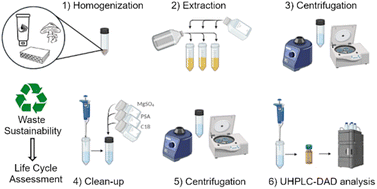
In response to the increasing demand for sustainable waste management and circular economy strategies, this study explores the bioremediation of cosmetic waste—specifically permanent oxidative hair dyes—using white-rot fungi and the subsequent valorisation into fungal-based biocomposite materials. Three fungal species (Trametes versicolor, Pleurotus ostreatus, and Ganoderma lucidum) were evaluated for their ability to degrade two model dye systems, each composed of a primary dye and a coupler. For the first time, a mixture design of experiments was applied to optimize fungal growth on substrates made from industrial cardboard waste and dye formulations, achieving 60% incorporation of waste-derived components. A quick, easy, cheap, effective, rugged, and safe extraction method coupled with ultra-high performance liquid chromatography-diode array detection enabled accurate quantification of dye degradation. Method validation confirmed low detection limits (2.2–5.6 mg kg−1), high extraction recoveries (≥83%), and negligible matrix effect. Under optimized conditions, over 99% degradation of most dyes was achieved within 7 days. The environmental sustainability of the entire process was evaluated through Life Cycle Assessment (LCA) using the Environmental Footprint 3.1 method. Among 16 impact categories, machinery energy consumption generated the greatest impact, when compared to materials, their transportation and laboratory equipment.
- This article is part of the themed collection: Celebrating International Women’s Day 2026: Women in RSC Sustainability
 Please wait while we load your content...


