


 PLATFORM UPDATE:


Divergent binding modes direct functional modulation: toward next-generation ionic liquids for enzyme stabilization and biocatalysis
 *b
and
Nilanjan
Dey
*a
*b
and
Nilanjan
Dey
*a
Abstract
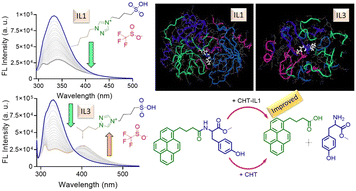
Stabilizing proteolytic enzymes such as chymotrypsin (CHT) remains a major challenge due to their susceptibility to denaturation and loss of activity under non-physiological conditions. Herein, we demonstrate the use of triazolium-appended zwitterionic ionic liquids (ZILs) as efficient stabilizing agents that not only preserve but also modulate the functional properties of CHT. Spectroscopic and kinetic studies reveal distinct structure–function effects dictated by alkyl substituents. IL1, with a linear substituent, binds through electrostatic and hydrogen-bonding interactions, inducing ∼3.2-fold fluorescence quenching while preserving the secondary structure. Importantly, the CHT–IL1 composite retained and even marginally enhanced catalytic activity toward a pyrenylated tyrosine substrate, underscoring the creation of a favorable microenvironment for turnover. In contrast, IL3, bearing a branched alkyl chain, inserted into hydrophobic protein pockets and stabilized a long-lived exciplex-type charge-transfer emission at 405 nm (lifetime extended from 7.8 to 13.5 ns). Docking simulations corroborated these findings, showing that IL1 stabilized CHT via hydrogen-bond/electrostatic contacts (−6.7 kcal mol−1) whereas IL3 formed an extended hydrophobic–aromatic network with stronger binding (−7.9 kcal mol−1). These results establish how structural variations in ZILs dictate protein interactions, offering valuable strategies for enzyme stabilization and functional modulation in biocatalysis.
- This article is part of the themed collection: HOT articles from RSC Sustainability
 Please wait while we load your content...


