


 PLATFORM UPDATE:


Assessment of functional alternatives to fluorinated foam blowing agents in insulation materials

Abstract
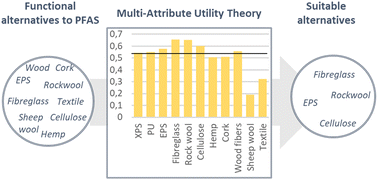
Using the substitution of fluorinated gases employed as foam blowing agents in insulation materials as a case study, we aim to apply and adapt a well-established multi-criteria decision analysis (MCDA) method for chemical alternatives assessment, the multi-attribute utility theory (MAUT) approach, to evaluate and compare non-chemical alternatives based on technical performance and environmental impact attributes. The functional substitution approach was followed to define the functions delivered by fluorinated gases in insulation materials, and the ZeroPM alternatives database was used to identify functional alternatives. Data on environmental impacts along the life cycle, and the technical performance of the identified alternatives were collected based on previous literature reviews on insulation materials. The MAUT approach was used to compare the different alternatives. Four decision-making scenarios were defined in order to illustrate the flexibility of the MAUT method for the assessment of functional alternatives. Overall, 32 alternative materials to polyethene foams (also known as polyethylene foams) and extruded polystyrene foams containing fluorinated gases were identified. 9 insulation materials were shortlisted for further evaluation based on the amount of data available. Overall, alternatives ranked better than polyethene foams and extruded polystyrene foams in every decision-making scenario tested in this study, suggesting that suitable and safer alternatives to fluorinated gases used in insulation foams can be identified. This work highlights how the choices made by the decision-maker to develop a MAUT model influence the final ranking of the alternatives being evaluated. This might be highly relevant in a regulatory context as the availability of suitable alternatives is a critical part in the decision-making on bans of harmful substances. Although promising in the field of alternatives assessment in a regulatory context, further work is needed to develop appropriate guidance for using MAUT methods to identify suitable alternatives to substances of concern.
 Please wait while we load your content...


