


 PLATFORM UPDATE:


Thermogravimetric and physicochemical characterization of waste tire–coconut shell blends as potential renewable energy feedstock

Abstract
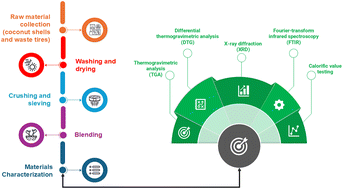
The global energy crisis caused by population increase and industrialization has prompted the exploration of more sustainable renewable energy sources. The utilization of organic and inorganic waste as an alternative energy source is emerging as a potential solution that can reduce dependence on fossil fuels. The present study investigates the thermogravimetric and physicochemical characteristics of blends derived from waste tires and coconut shells, emphasizing their viability as sustainable energy sources. Specimens consisting of different ratios of tire waste and coconut shells, designated as CS100WT0, CS75WT25, CS50WT50, CS25WT75, and CS0WT100, underwent analysis through thermogravimetric analysis (TGA), differential thermogravimetric analysis (DTG), X-ray diffraction (XRD), Fourier transform infrared spectroscopy (FTIR), and calorific value testing. The results demonstrate that augmenting the percentage of waste tires in the mixture significantly affects the thermal degradation, functional groups, crystalline phases, and calorific value of the material. The maximum temperature (Tmax) reached by CS100WT0 was 325 °C, suggesting superior thermal stability compared to the other specimens. However, the Tmax of CS75WT25, CS50WT50, and CS25WT75 increased as the content of waste tires increased. The incorporation of waste tires leads to a diminished intensity of the O–H functional group, indicating a reduction in moisture content and enhanced energy production efficiency. The calorific value of the specimens elevated with the elevated content of waste tires. The CS25WT75 specimen exhibited the highest calorific value of 27.75 MJ kg−1, indicating that it has a higher energy potential compared to blends with a higher proportion of coconut shells. This research improves waste-to-energy technologies that mitigate pollution, promote resource recovery, and offer sustainable alternatives to conventional energy sources. This research is consistent with several Sustainable Development Goals (SDGs), specifically Goal 7, which focuses on Affordable and Clean Energy, and Goal 12, which emphasizes Responsible Consumption and Production.
 Please wait while we load your content...


