


 PLATFORM UPDATE:


Decarbonizing anaerobic digestion in Canada's wastewater resource recovery facilities: an opportunity to attain carbon-neutral biogas production and its potential to offset waste management sector carbon emissions

Abstract
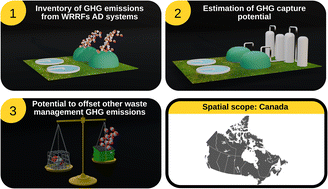
Anaerobic digestion (AD) is a process for valorizing sewage sludge through biogas production from sludge that is processed in water resource recovery facilities (WRRFs). Biogas can be combusted to generate thermal and electrical energy, converting the methane component of biogas into near-neutral carbon dioxide emissions of biogenic origin. Sewage-derived biogas is comprised of ≈98% biogenic carbon as methane and carbon dioxide. The capture of carbon dioxide of biogenic origin offers an opportunity to generate negative carbon emissions to offset the greenhouse gas (GHG) emissions from biogas production and utilization processes. In this work, an inventory of estimated GHG releases from AD system emissions and leaks in WRRFs across Canada was estimated with open-source data. The potentials to deploy different carbon capture processes to achieve carbon-neutral biogas systems were then estimated. The results show that implementing carbon capture systems downstream from biogas utilization or in biogas upgrading units could offset the carbon footprint of biogas generation systems. Implementing in-digester carbon capture would result in partial net GHG emission reduction. Moreover, some carbon capture processes would result in a surplus of negative GHG emissions with potential to offset the GHG emissions from other waste management activities, such as incineration.
- This article is part of the themed collection: Celebrating International Women’s Day 2026: Women in RSC Sustainability
 Please wait while we load your content...


