


 PLATFORM UPDATE:


Microplastic removal from wastewater through biopolymer and nanocellulose-based green technologies
 a
Tarikul
Islam,
*bc
a
Tarikul
Islam,
*bc
Abstract
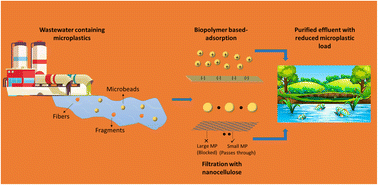
Microplastics (MPs) in wastewater are a growing environmental issue that needs effective solutions. This review examines the use of nanocellulose and biopolymers as sustainable options for removing these pollutants from water. Nanocellulose (NC) is efficient due to its large surface area and biodegradable nature, achieving up to 98% removal of microplastics through various processes, including adsorption and filtration. Similarly, biopolymers like polysaccharides, lignin, and pectin can remove up to 99% of particles by clumping and settling them out. However, some microplastics are not easily removed by these materials on their own. Combining different materials, such as cellulose and chitosan, can enhance removal efficiency to about 75%. Integrating these solutions into existing wastewater treatment plants could help reduce microplastics and save costs; however, it is essential to ensure compatibility with current systems and establish appropriate regulations. The review also highlights the need for future research to support the widespread use of these methods in water treatment.
- This article is part of the themed collection: RSC Sustainability Recent Review Articles
 Please wait while we load your content...


