


 PLATFORM UPDATE:


Activated carbon versus montmorillonite embedded on porous chitosan beads for the treatment of olive mill wastewater: a comparative study

Abstract
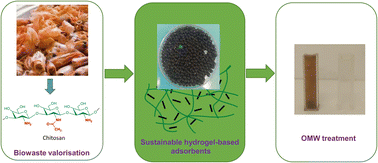
Efficient adsorbents require functional groups capable of strong coordination with surrounding species, combined with an open porous network that facilitates pollutant diffusion and storage. Conventional strategies to generate porosity typically rely on structure-directing agents, which are subsequently removed through time-consuming, energy-intensive, and environmentally unsustainable thermal or chemical treatments. Diverging from these traditional approaches, colloidal polysaccharides offer a sustainable alternative, forming inherently porous hydrogels that serve as self-supporting reactors for water purification. In this work, we harnessed this property to transform discarded seafood bio-waste chitosan into highly reactive adsorbents for the treatment of olive mill wastewater. To enhance polyphenol uptake, various exogenous nanoparticles were incorporated within the hydrogel matrix, among which activated carbon and, to a lesser extent, montmorillonite clay proved most effective. Adsorption tests were performed using syringic acid and caffeic acid as model polyphenols representative of olive mill effluents, followed by trials on real industrial wastewater. Unlike conventional powdered adsorbents, the self-standing nature and macroporous architecture of the chitosan beads offer significant advantages in terms of recyclability and handling. Furthermore, beads enriched with polyphenolic extracts can be repurposed for the subsequent removal of dyes, antibiotics, and copper contaminants.
 Please wait while we load your content...


