


 PLATFORM UPDATE:


From additive analysis to process monitoring: characterization of polypropylene solvent-based recycling from plastic feedstocks representative of sorting centres

Abstract
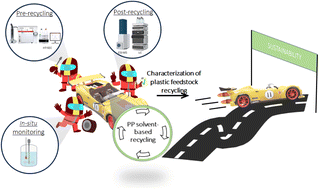
In between mechanical and chemical recycling, the recycling by dissolution/precipitation method has emerged as an economically and sustainably viable solution. This work addresses the challenges of this recycling method, particularly those related to the complex and diverse composition representative of polymers feedstocks from sorting centers, from an analytical perspective. We used various analytical tools, ranging from off-line chromatography coupled with high resolution mass spectrometry (LC-HRMS) to in situ spectroscopy, as well as thermal and fractionation analysis, to deeply characterize the plastic feedstocks at different stages of the recycling process. LC-HRMS and thermal gradient interaction chromatography (TGIC) provide valuable insights into the composition of market-available plastics feedstocks and the efficiency of sorting center operations. In situ NIR and Raman spectroscopy allowed real-time monitoring of the dissolution step to ensure complete dissolution, as well as the precipitation step to ensure effective polymer/additive separation. Ex situ attenuated total reflectance infrared spectroscopy (ATR-IR), differential scanning calorimetry (DSC), high temperature size exclusion chromatography (HT-SEC), and LC-HRMS confirmed that the recovered polymer after recycling maintained its properties while removing a fraction of additives. Also, we show that substitution of fossil-based solvents like xylene and decalin is possible by more responsible solvents like amyl acetate or cyclohexanone with comparable dissolution and additives removal performances.
- This article is part of the themed collection: Celebrating International Women’s Day 2026: Women in RSC Sustainability
 Please wait while we load your content...


