


 PLATFORM UPDATE:


Mechano-stimuli-responsive engineered device mimicking native anisotropy towards tissue regeneration

Abstract
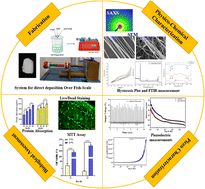
Tissue-related disorders continue to present critical clinical challenges due to their limited self-repair abilities and rising global incidence. Conventional grafting techniques and implant materials are suffering from significant drawbacks, including immune rejection, donor site morbidity, and lack of bioactivity. Herein, this study explores the development of a smart, biomimetic scaffold that combines a piezoelectric polymer polyvinylidene fluoride (PVDF) with a demineralized extracellular matrix derived from fish scales. The demineralization process effectively removes heavy metal contaminants while preserving the collagen-rich matrix, making it suitable for scaffold applications. PVDF, known for its biocompatibility, flexibility, and electroactive properties, was electrospun at varying concentrations to achieve nanofibrous membranes with tailored anisotropic and electromechanical characteristics. These PVDF nanofibers were layered onto D-FS to create hybrid scaffolds that mimic the hierarchical architecture and dynamic responsiveness of native skeletal tissues. Based on SEM and FTIR analyses, 12% w/v PVDF demonstrated uniform fiber distribution with minimal bead formation. Physico-chemical analyses confirmed its enhanced crystallinity and structural alignment, while electrical assessments demonstrated adequate piezoelectric performance under mechanical stimulation, including device fabrication. Biological evaluations, including the MTT assay, hemolysis analysis, LIVE–DEAD staining, and protein adsorption study, were conducted; the results indicate that C-FS exhibits cytotoxicity, whereas D-FS does not. This work presents a promising strategy for the development of next-generation tissue engineering scaffolds with the potential to eliminate the need for secondary surgeries.
 Please wait while we load your content...


