


 PLATFORM UPDATE:


Strategies for the inhibition of cellulose degradation in the valorization of lignocelluloses for the fabrication of functional materials
 *abc
Nianming
Jiao
a
and
*abc
Nianming
Jiao
a
and
Abstract
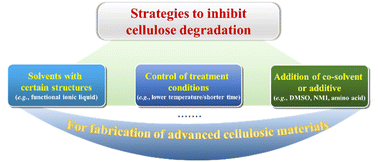
Synthetic fibers in the market are mainly derived from fossil resources. The depletion of these resources and the accompanied environmental issues have stimulated interest in the utilization of renewable materials. Cellulose, which is widely available in lignocelluloses, is a type of abundant and renewable biopolymer in nature. It has been ascending as a promising feedstock for the manufacture of functional materials to replace fossil-based synthetic fibers. Pretreatment of lignocelluloses is a requisite step for the production of cellulosic materials since this biopolymer is embedded in a matrix composed of lignin and hemicellulose in the plant cell wall. However, cellulose degradation usually occurs during the pretreatment and subsequent material preparation processes, affecting the properties of the fabricated materials. In this study, we provide a comprehensive review of the strategies to inhibit cellulose degradation in the valorization of lignocelluloses for the fabrication of functional materials. It is demonstrated that the interactions between the solvent (including organics, ionic liquids, and deep eutectic solvents) and cellulose are closely related to its degradation. Specifically, too strong interactions would lead to the degradation of this biopolymer, resulting in a decrease in the degree of polymerization of cellulose, which leads to inferior properties (including mechanical properties) of the corresponding materials. Introducing additives, co-solvents, and radical scavengers or the selection of appropriate solvents affect the interactions between the solvent and cellulose, thereby inhibiting degradation and facilitating the fabrication of functional materials with excellent properties. The challenges and future perspective (e.g., understanding the inhibition mechanism at the molecular level) in the development of more efficient technologies to prevent cellulose degradation are also highlighted. This study can provide guidance for the design of systems to obtain cellulosic materials with excellent properties, encouraging more researchers to engage in this field to promote relevant progress.
- This article is part of the themed collections: Celebrating International Women’s Day 2026: Women in RSC Sustainability and RSC Sustainability Recent Review Articles
 Please wait while we load your content...


