


 PLATFORM UPDATE:


Toward stable operation for thermochemical conversion of biomass and waste: ash chemistry for understanding ash adhesion at high temperatures
 *a
*a
Abstract
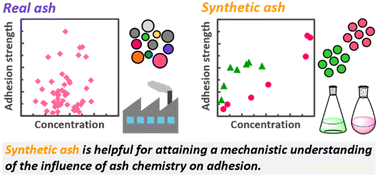
Toward the stable and efficient thermochemical conversion of coal, biomass and waste, the handling of ash particles derived from the unburnable portion of fuels is a key issue because ash can cause operational problems as a result of its adhesion characteristics at high temperatures. Understanding the relationship between ash chemistry and adhesion characteristics is a major focus in this research field. To investigate the relationship between the chemical properties of materials and their function, an approach using materials with well-designed chemical compositions is effective. However, real ash generated from commercial plants has complicated chemical properties. In this review, we highlight studies using synthetic ash, which is experimentally prepared from commercially available chemicals, to understand the relationship between ash chemistry and adhesion. Synthetic ash with simplified and carefully designed chemical components is helpful for attaining a mechanistic understanding of the influence of ash chemistry on adhesion.
 Please wait while we load your content...


