


 PLATFORM UPDATE:


The influence of cellular energy status, microtubules, and crowding on mitochondrial motion

Abstract
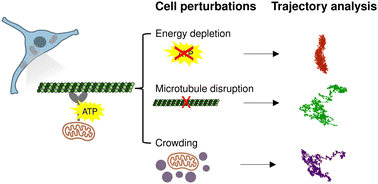
Eukaryotic cells rely on a tightly regulated system to transport vesicles and organelles within the cell, as thermal diffusion becomes inefficient for larger cargo. This transport system is composed of the cytoskeleton, a polymer mesh extending throughout the cell, together with different types of motor proteins that attach to and walk along the cytoskeleton, thereby carrying the cargo along with them. Here we used mitochondria in human cells as a model system for cargo transported by motor proteins, followed their motion using microscopy, and analysed the trajectories. Consistent with previous studies, we observed that the mitochondria often remain within a limited region, rattling around, for long periods of time, before finally taking a longer jump. To elucidate the mechanisms behind this behaviour we subsequently perturbed the system. Depletion of cell energy substantially prolonged the waiting time before taking a jump, but also decreased the jump lengths and, to a lesser extent, the extent of the rattling. Disruption of the microtubule network showed a more modest effect on the motion, the largest effect being an approximate doubling of the waiting time before making a jump. Similarly, increasing intracellular crowding by osmotically compressing the cells also had a rather small effect on mitochondrial motion. Again, there was an approximate doubling of the waiting time before making a longer jump, coupled to a more modest decrease in the extent of the rattling. Overall, our data give quantitative insights into the mechanisms underlying motor protein-driven motion and, in particular, highlights the waiting time before making a longer jump as a key parameter.
- This article is part of the themed collection: Soft Matter Open Access Spotlight 2026
 Please wait while we load your content...


