


 PLATFORM UPDATE:


Substrate-dependent interfacial structures of ultrathin poly(methyl methacrylate) films upon annealing revealed by sum frequency generation vibrational spectroscopy

Abstract
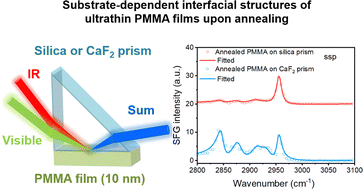
Understanding interfacial molecular structures at the polymer/adjacent materials interface is essential for optimizing the performance of energy-related devices. However, it remains insufficiently explored due to limited interface-specific techniques. Here, we employed sum frequency generation (SFG) vibrational spectroscopy to investigate the substrate-dependent interfacial structures of spin-coated ultrathin poly(methyl methacrylate) (PMMA) films (∼10 nm) on silica and CaF2 before and after thermal annealing. PMMA on silica exhibits similar OCH3-dominated SFG spectra before and after annealing. In contrast, PMMA on CaF2 shows a significant decrease in OCH3 signals and enhancements of CH2 and CH3 signals upon annealing, revealing substantial molecular reorganization at the buried PMMA/CaF2 interface. Quantitative analysis indicates that the OCH3 groups adopt a tilt angle of ∼77° (assuming a δ-distribution) after annealing, suggesting a more lying-down or disordered orientation. These substrate-dependent differences arise from weaker interfacial interactions and the hydrophobic nature of the CaF2 surface, which permits greater chain relaxation compared with the hydrogen-bond-constrained PMMA/silica interface. This study provides molecular-level and in situ insights into substrate-dependent structural evolution in polymer thin films and offers guidance for the interface engineering in photoelectric, photovoltaic, and energy-storage devices.
 Please wait while we load your content...


