


 PLATFORM UPDATE:


Tiny plastic, big trouble: how polystyrene nanoparticles impact DNA-damage repair deficient cervical cancer cells

Abstract
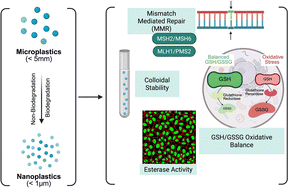
Microplastics are becoming increasingly abundant waste products; therefore, the risk of human exposure is also increasing. The cytotoxic consequences of microplastic exposure, particularly in cancer, have yet to be explored. We obtained commercially available polystyrene nanoparticles of uniform size (86.61 ± 6.41 nm) and confirmed the chemical composition and shape using Fourier transform infrared spectroscopy (FTIR) and scanning electron microscopy (SEM), respectively. We evaluated colloidal stability over a range of concentrations from 1–1000 µg mL−1 using hydrodynamic diameter and zeta potential, determining that higher concentrations exhibit greater colloidal stability compared to lower concentrations. Specifically, the zeta potential increased from very negative values of approximately −40 mV to approximately zero mV. To evaluate the cytotoxic effects of these microplastics, we evaluated the relative cell viability in vitro of HeLa cervical cancer cells, including those with DNA damage repair deficiencies in MLH1 and MSH2. High concentrations of polystyrene were required for observable decreases in cell viability, particularly in esterase activity measured with calcein AM. Cellular internalization of the nanoparticles was confirmed quantitatively using intracellular fluorescence and qualitatively using confocal microscopy for fluorescent polystyrene. Overall, these results indicate that high concentrations of polystyrene are required to elicit toxicological effects in cervical cells within 24 hours.
- This article is part of the themed collections: Soft Matter Open Access Spotlight 2026 and Soft Matter Underpinnings of Micro- and Nanoplastics
 Please wait while we load your content...


