


 PLATFORM UPDATE:


Physical effects of hydrogel coatings on seed germination

Abstract
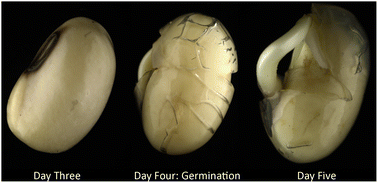
Hydrogel coatings are increasingly applied to seeds to enhance hydration and support germination; however, their outcomes remain inconsistent, and the underlying physical mechanisms remain unclear. Here, we dissect the hydrogel–seed interface as a soft material system, isolating how water imbibition, mechanical confinement, and oxygen permeability govern germination dynamics. Using artificial and natural seeds, we show that water uptake follows classical Lucas–Washburn dynamics and is not impeded by the hydrogel coating. Instead, germination delays arise from two key physical effects: the mechanical stiffness of the coating and its restriction of gas exchange. In Petri dishes, soft coatings accelerate germination, suggesting minimal resistance to radicle emergence; however, this advantage disappears in soil, where all coatings delay germination regardless of stiffness. Controlled-pressure experiments in transparent soil rule out mechanical load as the dominant factor. Instead, selectively exposing the hilum and micropyle—critical sites for gas exchange—restores germination timing. These findings demonstrate that hydrogel-coated seeds are primarily limited by oxygen diffusion, not water transport, revealing how soft material interfaces modulate biological function. This work provides design principles for soft coatings that balance hydration, mechanical compliance, and gas permeability in bio-integrated systems.
- This article is part of the themed collections: Soft Matter Recent HOT Articles, Soft Matter Open Access Spotlight 2025 and Soft Matter Emerging Investigators Series
 Please wait while we load your content...


