


 PLATFORM UPDATE:


Mitigating redox mediator-induced surface recombination for efficient photoelectrocatalytic benzyl alcohol oxidation on Mo-doped bismuth vanadate
 bcde
and
Chang-Ming
Jiang
*a
bcde
and
Chang-Ming
Jiang
*a
Abstract
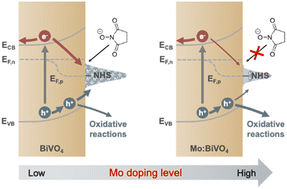
Synthetic photoelectrochemistry offers a sustainable route for selective organic transformations under visible light, yet carrier recombination losses at the electrode–electrolyte interfaces remain a critical bottleneck. Although redox mediators are often employed to improve selectivity and circumvent kinetic barriers, their interactions with the photoelectrodes are not well understood. Here we show that N-hydroxysuccinimide (NHS), a widely used hydrogen atom transfer (HAT) mediator, dynamically adsorbs onto oxygen vacancies on BiVO4 photoanodes, forming extrinsic interfacial states that trap photogenerated holes. Time-resolved photoelectrochemical and voltametric analyses reveal a direct correlation between this interfacial recombination pathway, photocurrent declines, and diminished reaction yields. Incorporating Mo dopant in BiVO4 increases the oxygen-vacancy formation energy, while electrolyte cation tuning modulates the electrochemical double-layer structure, jointly suppressing NHS chemisorption and mitigating surface recombination. During selective PEC oxidation of benzyl alcohol to benzaldehyde, optimized Mo-doped BiVO4 photoanodes achieve a conversion rate of 19.1 ± 1.4 µmol cm−2 h−1 with >92% faradaic efficiency, representing the highest performance reported for BiVO4-based benzylic alcohol oxidation. These findings identify interfacial mediator adsorption as a previously overlooked recombination channel and establish rational interfacial design as a powerful strategy for broadly tunable, high-efficiency light-driven organic synthesis.
 Please wait while we load your content...


